
In partnership with

Write docs 4x faster. Without hating every second.

Nobody became a developer to write documentation. But the docs still need to get written — PRDs, README updates, architecture decisions, onboarding guides.
Wispr Flow lets you talk through it instead. Speak naturally about what the code does, how it works, and why you built it that way. Flow formats everything into clean, professional text you can paste into Notion, Confluence, or GitHub.
Used by engineering teams at OpenAI, Vercel, and Clay. 89% of messages sent with zero edits. Works system-wide on Mac, Windows, and iPhone.
Happy long weekend, Elly here.
Three trends are colliding this week, and they're writing a new rulebook for how African institutions move money. Capitec handed its 1.5 million mobile users free on-net calls while business banking clients grew 71%. Ecobank's in talks to let African traders pay Chinese suppliers directly in yuan by year-end, cutting out dollar conversion fees that eat into margins. Uganda's central bank made its first gold purchase last Friday under a three-year pilot to diversify reserves away from US Treasuries. Someone check up on Trump. If you enjoy The Banking Brief, please whitelist this email and move it to your primary inbox. If this was forwarded to you, subscribe here.
Let's get into today's edition.
🧠 BRAIN TEASER
Scroll to the end for the answer.
GOLDEN NUGGETS
IMPACT METRICS
MAIN STORIES
Buy-now-pay-later meets online gambling and nobody's tracking the damage

South Africa's online retail market is racing toward R150 billion and 12% of total retail by 2027, but the booming e-commerce sector is outpacing oversight with rising buy-now-pay-later usage, limited credit visibility, and unregulated online gambling creating systemic financial risks.
Jason Sive, CEO of Mobicred, warns lenders have no visibility of customers' full credit obligations when BNPL providers don't report to credit bureaux.
South Africans spent R1.5 trillion on gambling in 2024/25, up R400 billion from the previous year, with R1.1 trillion wagered on betting alone according to the National Gambling Board.
Old Mutual Corporate data reveals 40% of working South Africans gamble frequently to cover monthly shortfalls and supplement income.
The global BNPL market hit $560 billion in 2025 transaction value, driven by interest-free instalments and low-friction digital access to credit.
When 40% of working adults gamble regularly and BNPL platforms don't report to credit bureaux, you create a blind spot where consumers layer debt obligations that individual lenders can't see. Mobicred's Sive says "we know how many of our customers are gambling and gaming monthly, and most of the time, those are the customers who cannot afford to be."
Treasury's proposed 20% tax on gross gambling revenue, layered on top of 6-9% provincial taxes, could push combined rates to 26-29% and drive players to offshore platforms.
The regulatory gap: BNPL providers operate outside traditional credit regulations while online gambling remains illegal except for licensed operators, creating a compliance vacuum where the most vulnerable consumers accumulate invisible debt to fund betting habits.
Capitec cracks the township remittance economy with Pakistan and Bangladesh
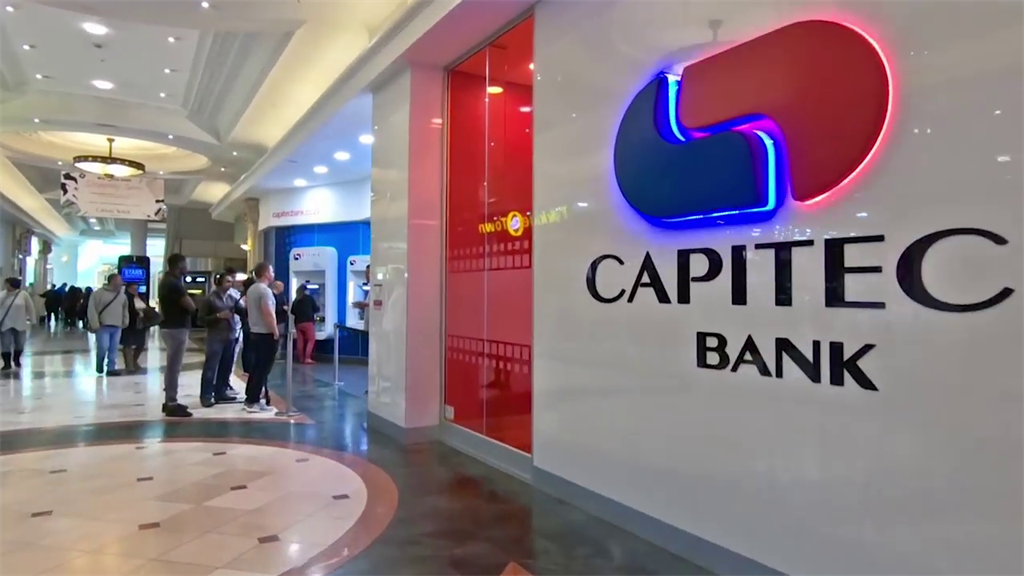
Capitec scaled its cross-border remittance offering from seven markets at launch to 26 countries in under a year, extending service to Pakistan, Bangladesh, and the UK while business banking customers surged 71% to 456,000.
The expansion targets immigrant communities running small businesses in South Africa's township economy, where Bangladeshi and Pakistani shop owners operate an estimated 55,000 to 300,000 establishments including spazas and cellphone stores.
BusinessDay reports Capitec's business banking breakdown at year-end showed 78,000 entrepreneurs, 112,000 merchants, and 260,000 small businesses.
Gerrie Fourie, Capitec's CEO, told shareholders the bank now has extensive experience in the cross-border remittance space with flows concentrated to Zimbabwe, Malawi, Lesotho, and Botswana, but the Pakistan and Bangladesh corridors unlock massive immigrant business owner populations sending money home monthly.
Skills Portal notes that while formal data on the number of Pakistani and Bangladeshi-owned shops is limited, estimates range from 55,000 to as high as 300,000 spaza shops and cellphone stores run by these communities across South African townships. No one can deny that that's a massive segment, but can that potential be profitably converted? Capitec's push into this segment likely indicates that this segment is already active in Capitec's networks and now they're building digital value-additive features around them.
Capitec's hitting the remittance market at the infrastructure layer, not the retail layer. While Western Union and MoneyGram fight over airport kiosks and CBD branches, Capitec's embedding remittances into the same digital banking app that 1.5 million South Africans already use for free on-net calls and business banking.
The 71% growth in business banking customers could signal they're winning the trust of exactly the demographic that sends money home monthly: immigrant entrepreneurs running cash businesses in townships. When you combine free banking, free mobile calls, and cross-border remittances in one app used by the shop owner who's already your customer, you eliminate the need to walk to a separate remittance agent and pay Western Union's markup.
The Pakistan and Bangladesh corridors aren't just geographic expansion, but a direct attack on the informal remittance networks and hawala systems that move billions annually outside formal banking channels. If Capitec can convert even 10% of that informal flow to its platform, it owns the township banking relationship from salary deposit to international money transfer to mobile airtime, locking out competitors who still think "cross-border payments" means serving corporates and expats, not the Bangladeshi shop owner in Soweto sending R5,000 home every month. Now the question becomes how retained will this user be? Are these integrated features enough to retain and woo this segment into the larger ecosystem?
Ecobank builds direct yuan payment rails to cut out the dollar middleman
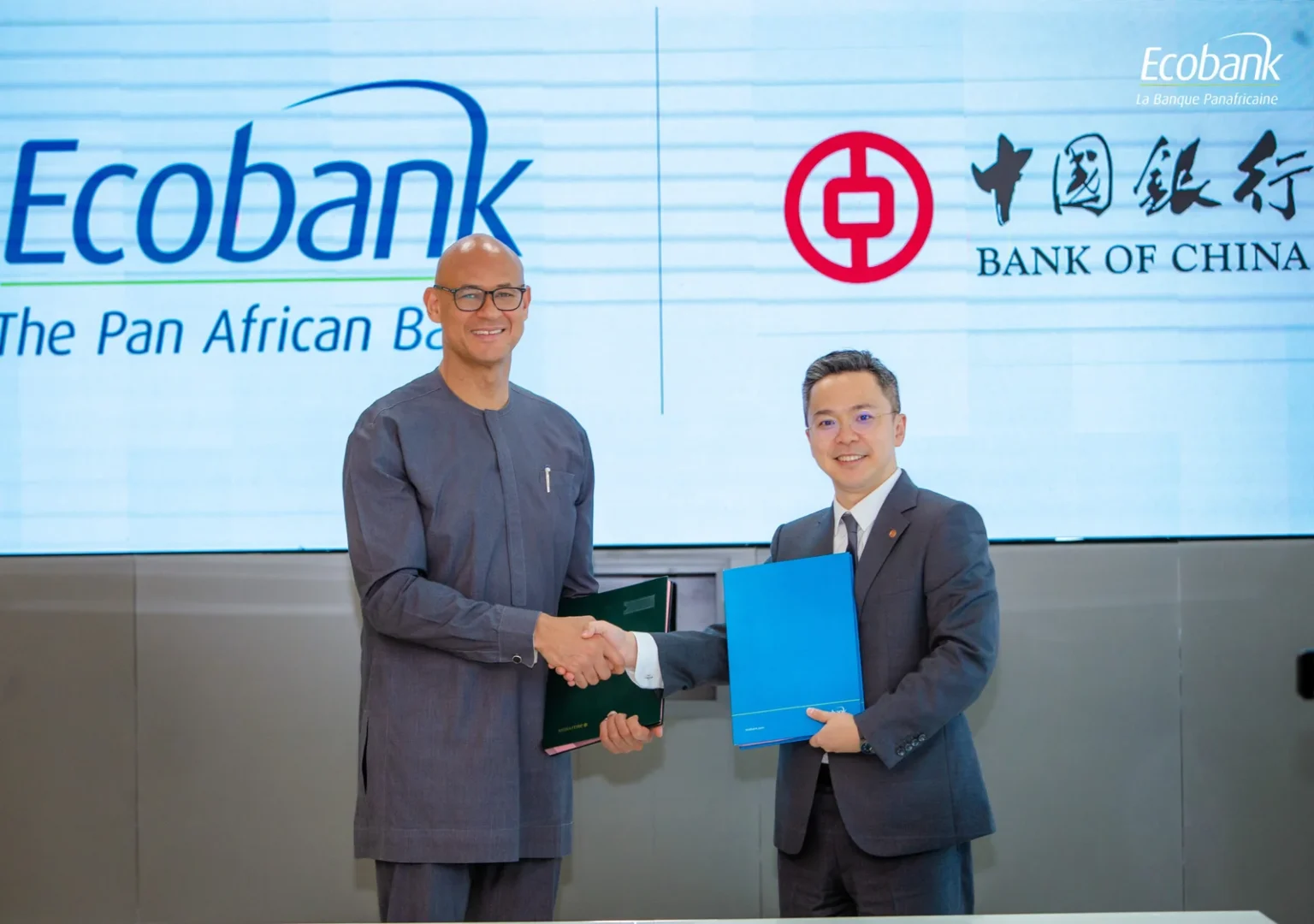
Ecobank and Bank of China are in advanced talks to launch a direct yuan settlement system by December 2026, allowing African businesses to pay Chinese suppliers in renminbi without converting through US dollars first.
The system targets the $348 billion annual trade volume between China and Africa, which grew 26% in Chinese exports to Africa in 2025, and aims to eliminate the double conversion fees and exchange rate risk built into current dollar-intermediated payment flows.
Nigeria Startup Act reports the initiative builds on existing currency swap agreements between African central banks and the People's Bank of China, with at least ten African nations now maintaining yuan swap lines.
Togo First notes the system will integrate with China's Cross-Border Interbank Payment System (CIPS), which already handles yuan transactions for 1,500 financial institutions across 110 countries. Fun fact - Standard Bank became the first African bank authorised as a CIPS direct participant in 2023, establishing the technical precedent Ecobank will follow.
The timing is what really matters: China exported $189 billion worth of goods to Africa in 2025, up 26% year-over-year, while African exports to China totalled $159 billion, creating a trade relationship where the majority of payments currently flow through dollar correspondent banks despite neither party primarily using dollars domestically. Read that again.
When African importers pay Chinese suppliers today, they convert local currency to dollars, send dollars through correspondent banks, then the Chinese supplier converts dollars to yuan, paying foreign exchange spreads and banking fees twice on a single transaction.
Ecobank's building the yuan rails because the current system only makes sense if you're a dollar correspondent bank collecting fees on both conversions. Direct yuan settlement matters because it's infrastructure, not a product. Once the pipes are laid, every African business importing from China can route payments through Ecobank's platform, and every competitor bank either builds their own expensive yuan infrastructure or becomes an Ecobank referral partner.
The risk: China's renminbi isn't freely convertible, meaning this only works if Chinese regulators keep expanding yuan internationalisation and African central banks maintain currency swap facilities. In my view, this is long overdue: with $348 billion in annual trade volume and 26% export growth, neither China nor African importers really want to keep enriching Western correspondent banks on transactions that never touch New York. That means the banks that win cross-border payments in the next decade won't be the ones with the most nostro accounts in New York, but the ones with direct clearing relationships in Beijing, and Ecobank's about to have one. Time to polish up your Mandarin.
STARTUP SPOTLIGHT
African fintech funding climbs 400% as investors chase infrastructure
African fintech startups raised $187.1 million across 21 deals in the first three months of 2026, marking quarter-over-quarter growth of almost 400% in deal value and 31% in deal count. Q1's total already surpassed last year's halfway mark and put the sector on track for its highest annual haul since 2023, when investment peaked before the global funding winter.
The numbers tell the story: Fintech historically dominated African venture capital, breaking the $1 billion barrier in both 2021 and 2022 driven by payments infrastructure and producing unicorns including Flutterwave and Wave. After several years of declining investment, 2026 opened with funding spreading across a broader set of subsectors beyond payments roots. North Africa appeared in almost half of this year's top 10 deals, with Egypt and Morocco seeing significant VC growth.
How it works: The Q1 rebound reflects a shift in investor strategy from consumer-facing neobanks to backend infrastructure. Development finance institutions and established Africa-focused funds are driving early-to-growth stage activity with clear pivots toward merchant infrastructure, Buy Now Pay Later products, B2B lending, and fraud prevention tools. Funds like Partech, TLcom Capital, and Symbiotics focused their Q1 deployments on financial stack companies serving other businesses rather than end consumers.
What's next: The fintech funding recovery signals an ecosystem maturing beyond early-stage consumer apps toward infrastructure plays that support cross-border commerce, trade finance, and business banking. With Ecobank building yuan settlement rails, Capitec integrating banking and telecom, and central banks buying gold domestically, the fintech startups capturing capital in 2026 will be the ones solving real payment friction for businesses operating across African corridors, not the ones building another consumer wallet app.
POLICY WATCH
| Country | Development | Impact |
|---|---|---|
| Uganda | Bank of Uganda launched three-year gold purchase pilot targeting 7-10 tonnes annually, with first test purchases completed last Friday | Diversifies reserves away from US Treasuries; requires commercial banks to develop mining finance and commodity hedging capabilities |
| South Africa | Gambling advertising regulations expected before July 2026 from dtic, proposing 40% of marketing budgets toward responsible gambling and credit usage ban | Could reduce BNPL usage on betting platforms but enforcement challenges remain with offshore operators |
| South Africa | Mobile termination rate drops to 5c/minute on July 1, 2026 from current 7c/minute for large operators which means starting in July 2026, the "hidden fee" that phone companies pay each other to connect your calls is going down. This makes traditional calls less profitable to networks | Accelerates voice commoditisation and MVNO pricing pressure; benefits Capitec Connect's free on-net call model |
| South Africa | Treasury proposed 20% tax on gross gambling revenue, layered on 6-9% provincial taxes | The downside is that combined 26-29% tax rates could push players to offshore platforms and increase informal betting |
| South Africa | Constitutional Court ruled against Absa in R1.9 billion tax case, establishing banks can't claim ignorance of tax avoidance if transactions formed part of overall structure | This sets precedent for stricter bank accountability in structured finance arrangements designed to reduce tax liability. In short: big banks are responsible for knowing if the deals they participate in are tax-dodging schemes |
RAPID FIRE
WHAT TO WATCH
TOOLKIT
+THIS
On This Day in Banking History
Around April 25, 1951, South African Reserve Bank Governor Dr. M. H. de Kock presented his monetary policy report to Parliament, arguing that the newly independent central bank (separated from Treasury control in 1944) needed freedom to set interest rates based on economic conditions rather than political pressure. De Kock faced fierce resistance from mining companies who wanted cheap credit and politicians who favoured expansionary policy. He lost the immediate battle but won the war: by 1956, SARB gained statutory independence that became the model for African central banking.
🧠 BRAIN TEASER ANSWER
The average regular gambler in South Africa wagers R234,375 annually, which breaks down to roughly R19,531 per month or R4,507 per week. Of course there are outliers skewing this figure. We would also need to factor in wager recycling to avoid inflating this figure further, so the final figure is about 20-30%, or approximately a third of the figure above. What this means is that cash is being recycled rather than new cash being wagered every single time.
Still, when 40% of working adults are spending nearly a third of ~R20,000 monthly (R6,666.66) on gambling and BNPL providers aren't reporting to credit bureaux, you create a systemic blind spot where traditional credit risk models totally miss the extent of consumer leverage. It's quite a serious situation. The implications for banks is that if your credit scoring doesn't factor in gambling behaviour and unregulated BNPL debt, you're likely underpricing risk on nearly half your lending book. The customers gambling a third of R234,375 (R78,125) annually aren't the high-net-worth individuals playing for entertainment. These are the financially stressed consumers using BNPL to fund betting habits, which explains why Mobicred's CEO says those are the customers who cannot afford to be gambling at all.