- The Banking Brief
- Posts
- Shoprite Goes After $900 million Market
Shoprite Goes After $900 million Market
Inside: Optasia acquires Finergi for R500m

Elly Ngoma
March 19, 2026
The common thread today is that everyone's building infrastructure for people who've been locked out of formal finance. Shoprite wants spaza shops handling card payments and airtime top-ups. Optasia wants prepaid meters to offer credit the moment you buy electricity. These expansion moves aren't charity work; there's serious money in serving the 80% of South Africans who don't use formal banking.
In other news, if you enjoy The Banking Brief, please whitelist this email and move it to your primary inbox. We promise to make fintech infrastructure slightly less abstract.
Let’s get into today’s edition.
IN THIS WEEK'S EDITION
Shoprite buys majority stake in R&A Cellular to enter township payments race via point-of-sale infrastructure
Optasia acquires Finergi for R500m, bringing electricity credit to prepaid meter users
Bvnk South African Stablecoins Company to be Acquired by Mastercard
Golden Nuggets
🛒 Shoprite bought a majority stake in R&A Cellular for an undisclosed amount, entering the point-of-sale machine sector targeting informal markets. R&A Cellular's platform enables spaza shops and informal merchants to offer prepaid airtime, electricity, gaming products, and card-based payment acceptance. The deal deepens Shoprite's exposure to township and rural economies, where the company already dominates retail. Capitec and Pepkor also compete aggressively in the informal market POS space.
⚡ Optasia acquired electricity credit specialist Finergi for R500m ($30m). The Dubai-based fintech's platform allows prepaid electricity meters to function as digital wallets - users can access credit when topping up electricity, with repayment built into the next purchase. The deal extends Optasia's embedded finance strategy beyond telecoms into essential utilities. Finergi has patents in 24 countries and active pilots across Southern, East, and West Africa.
MAIN STORIES
RETAIL
Shoprite Goes After POS Market
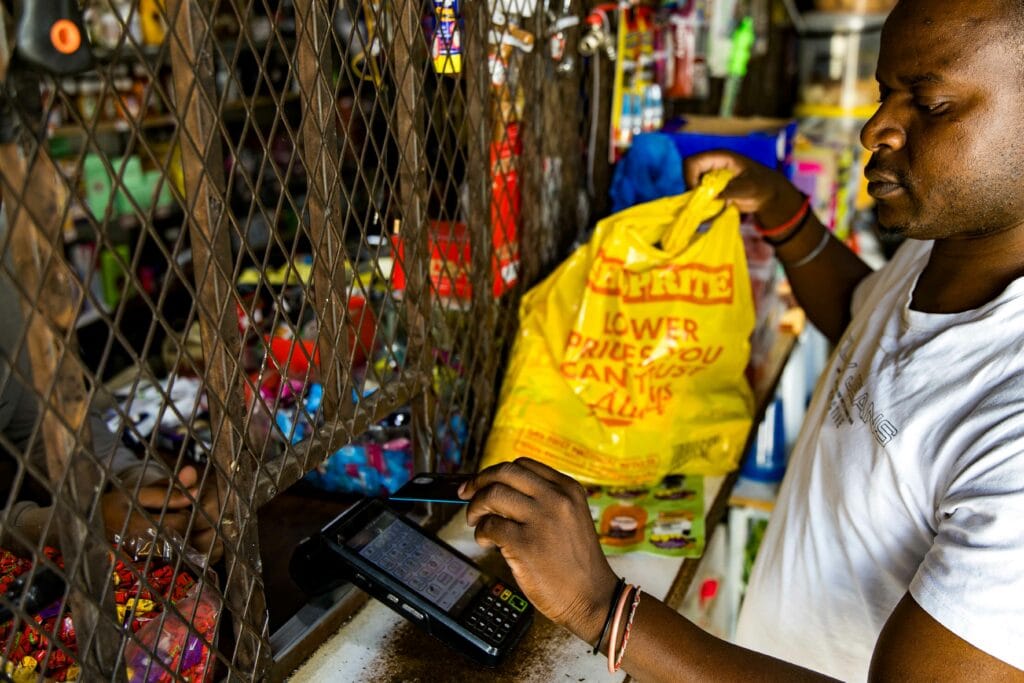
What’s Happening? Shoprite bought a majority stake in R&A Cellular for an undisclosed amount, marking Africa's largest retailer's formal entry into the point-of-sale machine sector. R&A Cellular operates a POS platform that enables informal merchants - think spaza shops, township traders, and peri-urban retailers - to offer prepaid airtime, electricity, gaming vouchers, and card-based payment acceptance. The Mpumalanga-based company already has an existing relationship with Shoprite, enabling the sale of Shoprite vouchers through its devices. For Shoprite, which runs over 3,000 stores across Africa and dominates South African retail with brands like Checkers, Usave, and OK Foods, the acquisition is a natural extension of its Money Market financial services ecosystem into the informal economy.
State of Play: The informal market has become a battleground for financial services providers looking to diversify revenue streams beyond traditional retail or banking. Capitec, targeting the informal economy to build its business banking proposition, has refined and taken to market competitive fees and commissions on its point-of-sale machines.
Then there’s Pepkor. Africa's largest clothing retailer (Ackermans, PEP, Dunns), is seeking a banking licence to serve its massive customer base of price-sensitive consumers. The scramble for township wallet share is intensifying because the numbers are compelling: South Africa's informal economy accounts for a significant portion of consumer spend, particularly in townships and rural areas where formal banking infrastructure remains sparse. By enabling informal retailers to accept digital payments and offer high-frequency prepaid products, companies like Shoprite gain multiple revenue streams - transaction fees, commission on airtime and electricity sales, plus they get to deepen customer relationships.
So what? The deal positions Shoprite to compete directly with Kazang (a Blue Label Telecoms subsidiary), 1Voucher, and other established players in the prepaid services distribution space. But it’s more than that. What’s happening is a broader strategic shift: retailers are no longer content to just sell groceries or clothing. They’ve maxed out that vertical. They're building financial services ecosystems that touch every point of daily spending - from buying bread to topping up airtime to paying for electricity. For consumers in townships and peri-urban areas, this means more convenient access to essential services without travelling to shopping centres or banks. For Shoprite, it means embedding itself deeper into the daily financial lives of millions of South Africans who shop at spaza shops more frequently than they visit formal retailers.

The Case for the Township POS Market

OPTASIA BUYS ELECTRICITY CREDIT PLATFORM FOR R500M
What’s the headline?: Optasia acquired Finergi for R500m ($30m), with a further $10m contingent on performance milestones. Optasia, the recently-listed JSE-listed fintech, which provides AI-powered microlending through mobile operators like Vodacom, MTN, Airtel, and Indosat Ooredoo, is extending its embedded finance strategy beyond telecoms into essential utilities. Finergi's platform allows prepaid electricity meters to function as digital wallets - customers can access credit via mobile request when purchasing electricity, with repayment automatically built into the next top-up. The technology works identically to Optasia's core business of airtime lending, making the strategic fit obvious.
Catch up on Optasia: Optasia, which listed on the JSE in November 2025 at R19 per share (raising R6.5bn), smashed its IPO guidance in its maiden results. Revenue jumped 76% to $265.4m for the year ended December 2025, while adjusted EBITDA grew 52% to $114.5m. The total value of credit facilitated through the platform climbed 44% to $5.5bn, with 432 million service users - a 43% increase year-on-year. FirstRand acquired a 20.1% stake in Optasia ahead of the listing, validating the business model. The company's micro-financing solutions now account for 63% of group revenue, overtaking airtime credit for the first time. Optasia uses proprietary AI algorithms to assess creditworthiness using unstructured data from mobile operators and wallet providers, reporting a default rate of 1.2% - which is quite low by emerging market standards.
Why Finergi? The Finergi acquisition unlocks a massive addressable market. Across Asia and Africa, the total market for electricity credit advances reached $1.3bn in 2025 and is projected to expand to $3.5bn by 2035, according to Optasia's analysis. With approximately 168 million prepaid meters installed across 20 countries in 2025, and utilities continuing to mandate prepaid systems, the infrastructure base for embedded electricity credit is already in place. Finergi provides Optasia with access to direct KYC (Know Your Customer) capabilities and on-the-ground identity data, strengthening risk infrastructure and underwriting accuracy. By enabling prepaid electricity meters to function as financial access points, the platform creates a new financial rail for millions of consumers traditionally underserved by banking systems. The deal's structure - $24.9m cash and 4.3 million Optasia shares worth $5.1m - suggests the related-party nature of the transaction (Bassim Haidar, a non-executive director of Optasia, indirectly owns the majority of Finergi).
Rapid Fire
🇿🇦 SOUTH AFRICA
Competition Commission defends Maziv merger approval. MPs grilled the Competition Commission this week over its decision to allow Remgro and Vodacom's R13bn fibre merger after initially recommending it be blocked. The transaction, announced in November 2021, was investigated for almost 22 months before the Commission recommended prohibition. The Competition Tribunal rejected the deal in October 2024. But after settlement discussions and revised conditions, the Commission reversed its position and did not oppose the appeal, which the Competition Appeal Court approved. MPs implied big companies in the media sector tend to get their way despite regulatory laws.
Momentum Group appoints Tyrone Soondarjee as chair. The Group named Tyrone Soondarjee as independent chair of Momentum Group boards with immediate effect. Soondarjee served as interim chair since November 2025. He brings over 40 years of corporate experience, previously serving as chair of Grindrod Bank, CFO of Cell C, group financial director of Sasfin Banking Group, and director of finance at Deloitte. He is currently non-executive chair of Rentworks Holdings.
Old Mutual benefits from sharper corporate strategy. The insurer reported a 13% increase in results from operations to R9.8bn for the year ended December, while adjusted headline earnings increased 24% to R8.3bn. The group sharpened its corporate strategy around unlocking value and generating growth, anchored in four priorities: driving competitiveness in South African businesses, deepening market leadership in Southern Africa, expanding OM Bank, and selectively pivoting in growth markets. Annual dividend increased 8% to 93c per share. OM Bank customer run rate now sits at about 3,000 per day.
Roger Jardine to succeed Trevor Manuel at Old Mutual. Former trade unionist and investment banker Roger Jardine will become Old Mutual's next chairman, succeeding Trevor Manuel who retires after nine years. Jardine currently serves as an independent non-executive director and chairs the nominations committee. He brings experience from Futuregrowth Asset Management and a background in labour movement leadership.
Sanlam writes down Malaysian insurer stake to zero. The insurer impaired its entire stake in Malaysian insurer to zero value, taking a significant writedown. Separately, Sanlam announced it is betting on its GoTyme partnership to expand into full-service digital banking.
🌍 WEST AFRICA
MTN Group: West Africa delivers big. MTN's West African operations posted strong growth, with Nigeria and Ghana driving group performance despite currency headwinds.
🌐 INTERNATIONAL
Mastercard's $1.8bn deal signals shift in global payments war. The card network's acquisition marks a strategic response to evolving payment infrastructure competition.
FT report: Investing in Nigeria. The Financial Times published a special report examining investment opportunities and risks in Nigeria's economy.
Startup Spotlight
Three South African entrepreneurs just became billionaires. Mastercard is buying their stablecoin payments company BVNK for $1.8 billion (R30 billion, including R5 billion in contingent payments). Five years from founding to exit. Not bad.
BVNK links blockchain tech with traditional banking networks. Businesses use it to send, receive, and hold stablecoins - cryptocurrencies pegged to real currencies like the US dollar, so no Bitcoin-style volatility. The platform processes over $30 billion annually across 130+ countries on all major blockchain networks. Think cross-border payments, merchant processing, digital asset custody.
The timing was perfect. In January, BVNK announced it would power Visa Direct (Visa's $1.7 trillion real-time payments network) with stablecoin payments. In February, it secured a CASP licence from Malta's financial regulator, allowing it to offer digital asset services across the entire European Economic Area. Then Mastercard came knocking.
Why Mastercard wants it: stablecoins are faster, cheaper, and available 24/7 compared to traditional payment rails. Cross-border payments take days and cost a fortune. Stablecoins settle in seconds with minimal fees. Mastercard needs to bridge its card rails with blockchain systems before rivals do. Building this capability internally would take time. Buying BVNK gets them instant access to geographic reach, difficult-to-acquire payment licences, and established ecosystem relationships.
WHAT TO WATCH
Date | Event | Why it matters |
|---|---|---|
20 March 2026 | African Development Bank Annual Meetings conclude | Infrastructure financing announcements; sovereign debt discussions |
Q1 2026 | Pepkor to cancel partnership with Investec/ pursue another bank | Africa's largest clothing retailer's fintech push |
Q2 2026 | Old Mutual OM Bank marketing campaigns launch ~3000 sign-ups daily | Public campaigns shift focus to "new to Old Mutual" customers |
31 March 2026 | Optasia-Finergi deal expected to close | Electricity credit expansion across Africa begins |
On This Day
19 March 2008: Bear Stearns, the 85-year-old Wall Street investment bank, was sold to JPMorgan Chase for $2 per share - a 93% discount from its closing price just two days earlier. The Federal Reserve engineered the emergency weekend deal, agreeing to absorb $30bn in Bear's toxic mortgage-backed securities to prevent a complete collapse that could trigger wider financial contagion. Bear Stearns had been one of the most aggressive players in the subprime mortgage market, packaging and selling billions of dollars in mortgage-backed securities that imploded when US housing prices crashed. The sale marked the first major casualty of the 2008 financial crisis, six months before Lehman Brothers' bankruptcy would send global markets into freefall. JPMorgan later increased its offer to $10 per share after shareholder backlash, valuing Bear at $1.2bn - still a fraction of its $20bn market capitalisation in January 2007.
Loved it, hated it, or felt like we missed the mark? Reply with your feedback.
Forward this to a colleague who deserves to stay on the cutting edge.